Asian Tech Rips, the Refining Distortion, and the Euro's Ceiling: The Desk View for 15 July 2026
This morning gives me a clean example of a market that is relieved and fragile at the same time. Cooling US inflation and a fresh artificial intelligence bid are lifting Asian technology hard, with the Kospi up more than 7 per cent. Underneath that tape, though, the signals I actually trade are pointing the other way: a refining complex that refuses to cheapen, a China print that disappoints, a German logistics shock, and a monetary system where the euro still cannot challenge the dollar. The rally is real. So are the cracks. That is the tension I am carrying into the session.
1. The Kospi rips while Europe shrugs at ASML
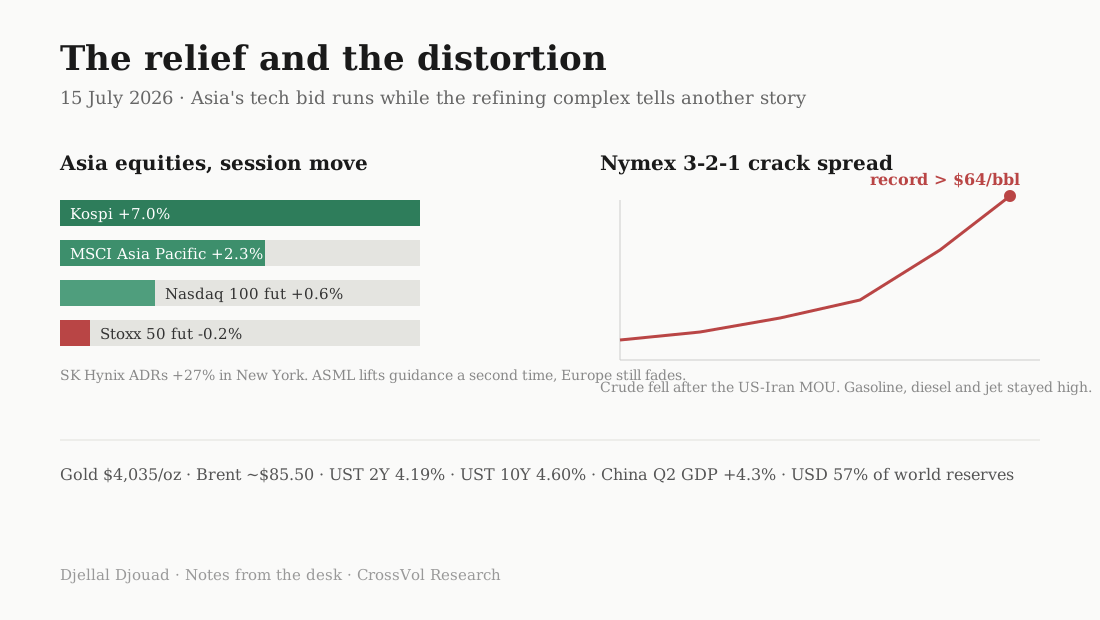
Asia ran a spectacular rally led by the Kospi, up more than 7 per cent on SK Hynix, whose ADRs flared 27 per cent in New York. The MSCI Asia Pacific added 2.3 per cent, with the Nikkei 225 and the Taiex both green, and Nasdaq 100 futures point 0.6 per cent higher into the US open. What strikes me is the contrast with Europe. Stoxx 50 futures barely flickered on ASML raising full-year guidance for the second time, then slipped 0.2 per cent. When a name delivers that cleanly and the index still fades, the tell is that European risk appetite is being capped elsewhere, in this case by natural gas at its highest since March and a heavy geopolitical backdrop. Most regional indices are still lower on the month, and Asia has lost the standalone mojo it carried before the Iranian conflict.
2. A cooler CPI, and a Fed that refuses to call it
US CPI fell for the first time in six years, and the market did what markets do: the probability of a July hike collapsed from 40 per cent to under 17. Two-year yields settled at 4.19 per cent, the ten-year at 4.60. I would not chase that move. Kevin Warsh refused to declare victory, said the mission is not accomplished, and left a September move on the table. That matters because positioning is lopsided. Traders piled into short fed funds futures with open interest doubling since June, so the pain trade is a hawkish surprise, not a dovish one. With inflation swaps and breakevens still low, there is a real gap between what the rates desk is pricing and what a single soft print can actually justify. This is where I watch for whiplash.
3. The wrong oil price: crack spreads, not crude
Here is the distortion I care about most today. Trump's threats to hit Iranian power plants and bridges, plus the reinstated Hormuz blockade, hold Brent near 85.50 dollars. But look past the crude screen. Prices for gasoline, diesel and jet fuel stayed stubbornly high even after crude fell on the US-Iran memorandum of understanding, and the Nymex 3-2-1 crack spread set a record above 64 dollars a barrel. That is not a crude story, it is a refining story: capacity damaged in the Gulf and Ukrainian strikes on Russian refineries have jammed the conversion of barrels into product. The cost that reaches the real economy is the product, not the crude, which is exactly why a hawkish central-bank tone is easy to justify right now. Gold reading that same setup slipped to 4,035 dollars an ounce, pressured by the prospect of high real yields and a firmer dollar.
4. China's miss and the Rhine running dry
China grew 4.3 per cent in the second quarter, its slowest in three years and below expectations, even as June retail sales and industrial production beat. I read that split as the market reads it: monthly activity can flatter, but the quarterly aggregate keeps the doubt about domestic demand alive. Then there is a very physical risk in Europe. The heatwave is drying the Rhine, forcing barges to lighten their loads. Thyssenkrupp suspended its pusher-boat service and BASF added vessels to cover the lost capacity. A prolonged low-water spell could cost 0.4 per cent of German GDP, as it did in 2018, and it lands on a manufacturing sector already strained by energy costs, with rail alternatives limited by works on the right bank. This is the kind of idiosyncratic supply shock that never shows up in a rates model until it does.
5. The euro's structural ceiling
The last piece is the slowest moving and the most important. For all the talk of de-dollarisation, Bloomberg Intelligence lays out the ceiling plainly: the dollar is still 57 per cent of global reserves and 63 per cent of international debt, against 20 and 25 per cent for the euro. The euro lacks an optimal currency area and a unified bond market, and the numbers are stark, roughly 14 trillion dollars of aggregate European debt against 31 trillion for the US Treasury market. That depth is the whole game. Christine Lagarde is right to push capital markets union and joint debt issuance, because only a common safe asset creates a competitive liquidity pool, and the digital euro on its 2029 timeline is part of the same argument. Until there is a euro-denominated pool that trades like Treasuries, the single currency stays a price-taker in the system.
How I am carrying it
My read is a genuine reprieve sitting on unfixed structural cracks. The Asian liquidity and the softer rates path buy time, but the refining distortion, the German logistics fragility and the absence of a credible dollar alternative keep the balance precarious. I am respecting the tech tape without trusting it, staying alert to a hawkish Warsh surprise rather than a dovish continuation, and treating product prices, not crude, as the honest signal on energy. Short-term optimism, long-term fragility, and the discipline is to hold both in view at once.